Installation and connection
Installation
Mounting positions
Vertical installation in elongated nozzle
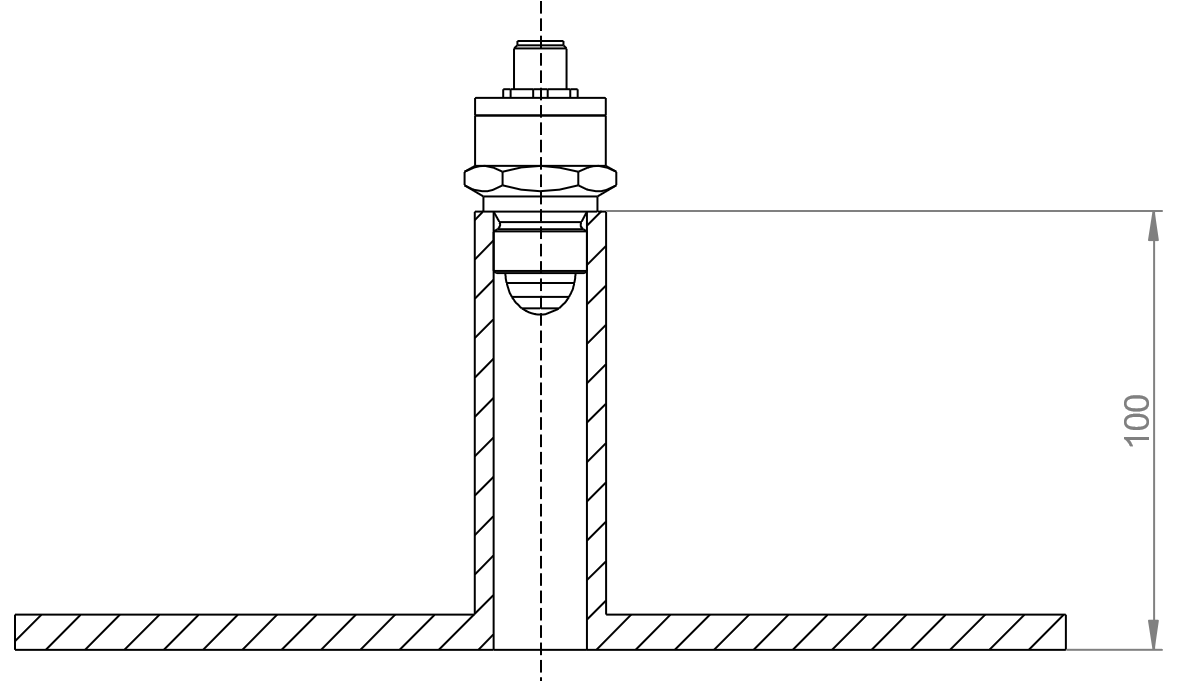
Vertical installation from above
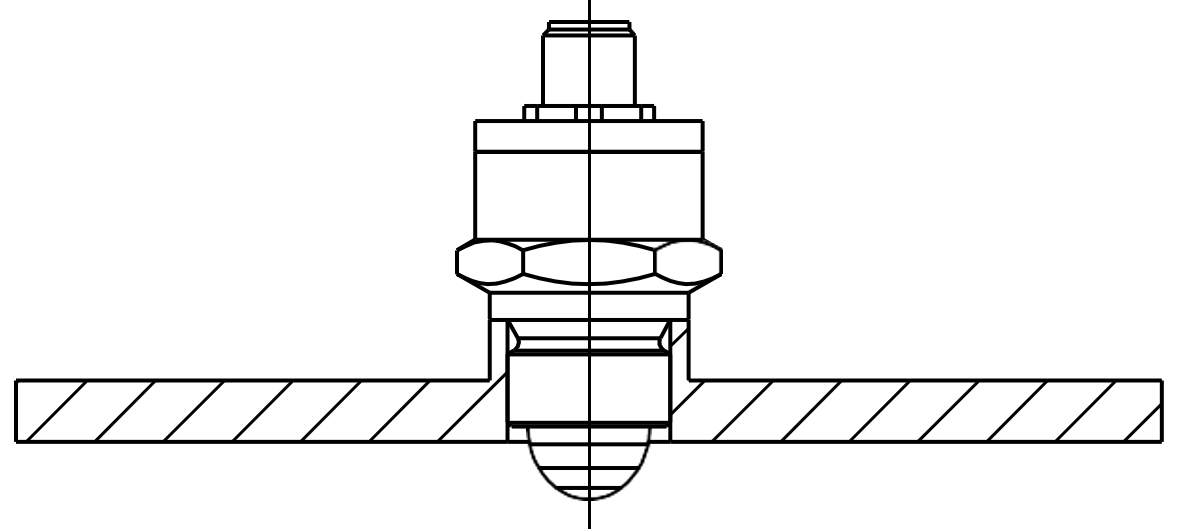
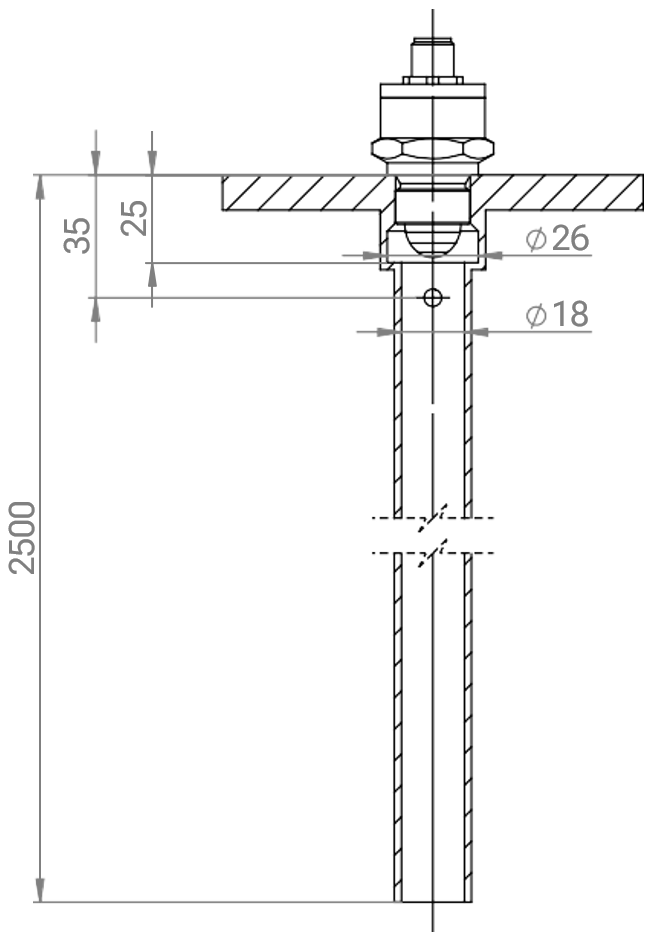
Vertical installation in the protection tube
Warning
Physical injuries due to hazardous media
Upon contact with hazardous media (e.g. oxygen, acetylene) and harmful media (e.g. corrosive, flammable, toxic, carcinogenic, radioactive), there is a danger of physical injuries. Should a failure occur, hazardous media with extreme temperatures (over 55 °C [131 °F]), under high pressure or vacuum may be present at the instrument.
For these media, in addition to all standard regulations, the appropriate existing codes or regulations must also be followed.
Warning
High-frequency electromagnetic waves
The antenna of the radar sensor emits high-frequency electromagnetic waves. To avoid health hazards, additional measures should be taken.
Position the antenna so that a safety distance of at least 20 cm between the antenna and workplaces is ensured.
Ensure that people do not stay in the immediate vicinity of the antenna for extended periods.
Effect of radiation on humans
The radiation of the wavelength emitted by the radar sensor has no known effects on the human body, apart from heat absorption in the range of a few tenths of a degree. The radiation of the radar sensor is comparable to, for example, smartphones and Wi-Fi routers, which operate insimilar frequency range. However, the transmission power of the radar sensor is much lower.
Check the instrument for any damage that may have been caused.
In the event of any damage, do not commission the instrument and contact the manufacturer immediately.
Mounting
Observe the torque values of the screws specified in pipefitting work.
In the selection of the mounting material (seals, screws, washers and nuts), take the process conditions into account.
Specify the suitability of the seal with regard to the medium and its vapours.
Ensure that the seal has corresponding corrosion resistance.
Mounting preparation
Ensure that the sealing faces of the vessel or instrument are clean and do not show any mechanical damage.
Sensor components, process seals and process interfaces must be in accordance with the installation conditions, and the process pressure, the process temperature and the medium characteristics must correspond to the parameters given on the product label.
Electrical connection
Electrical connection to the voltage supply
For supply voltage, see product label or connection diagram.
Pin assignment
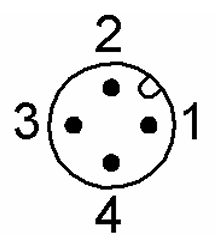
Pin |
Function |
|---|---|
1 |
10 … 30 V |
2 |
4 … 20mA |
3 |
0 V |
4 |
n.c. |
Note
For pin assignments, see also product label
Shielding and cable routing
Both unshielded and shielded cables can be used to connect the devices. In systems with strong electromagnetic interference, the use of shielded cables is recommended.
Route cables with strain relief.
Grounding the radar sensor can minimize the influence of electromagnetic interference.