Resolution#
The RadarImager has two important resolution characteristics: lateral resolution in the XY direction and depth (range) resolution in the Z direction. Both describe different aspects of image formation and therefore have to be interpreted differently.
Resolution lateral (XY-direction)#
Lateral resolution is determined by the operating frequency and the corresponding wavelength. Under ideal conditions, the RadarImager can resolve structures within one image position or layer down to approximately 1.7 mm at an operating frequency of 60 GHz. This assumes that the radar wave reaches the target object from all relevant directions without significant disturbance. In the movement direction, the optimal can be achived almost over the whole image extent. In the lateral direction (sideways to the movement direction), the best-case resolution is differnt for different image regions. In general, the closer and more centered the region of interest, the better the resolution.
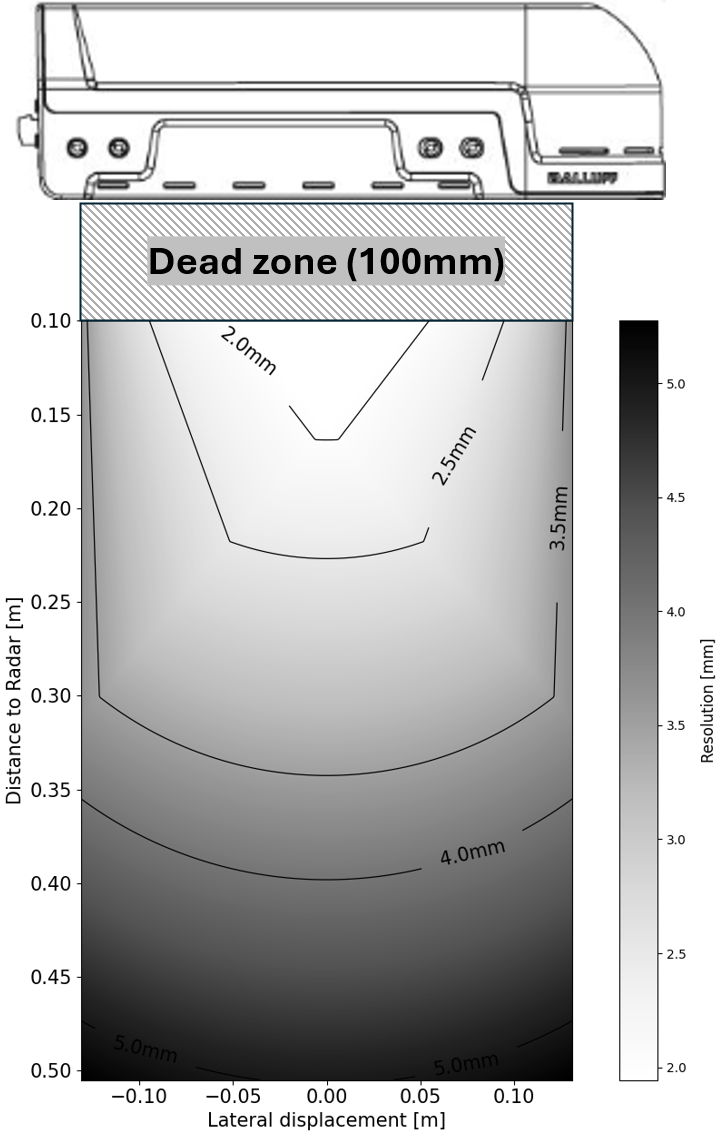
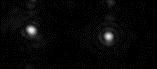
In practical terms, this means that two objects can be distinguished as separate bright structures if they are at least about 1.7 mm apart. If the goal is not only to detect two bright points but also to evaluate geometric detail, the relevant object features must be larger than the resolution limit.
Resolution limitation in depth (Z-direction)#
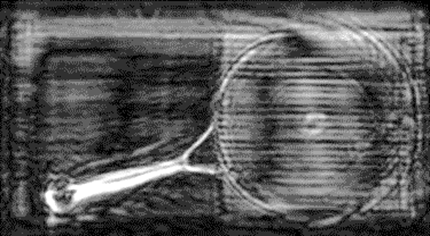
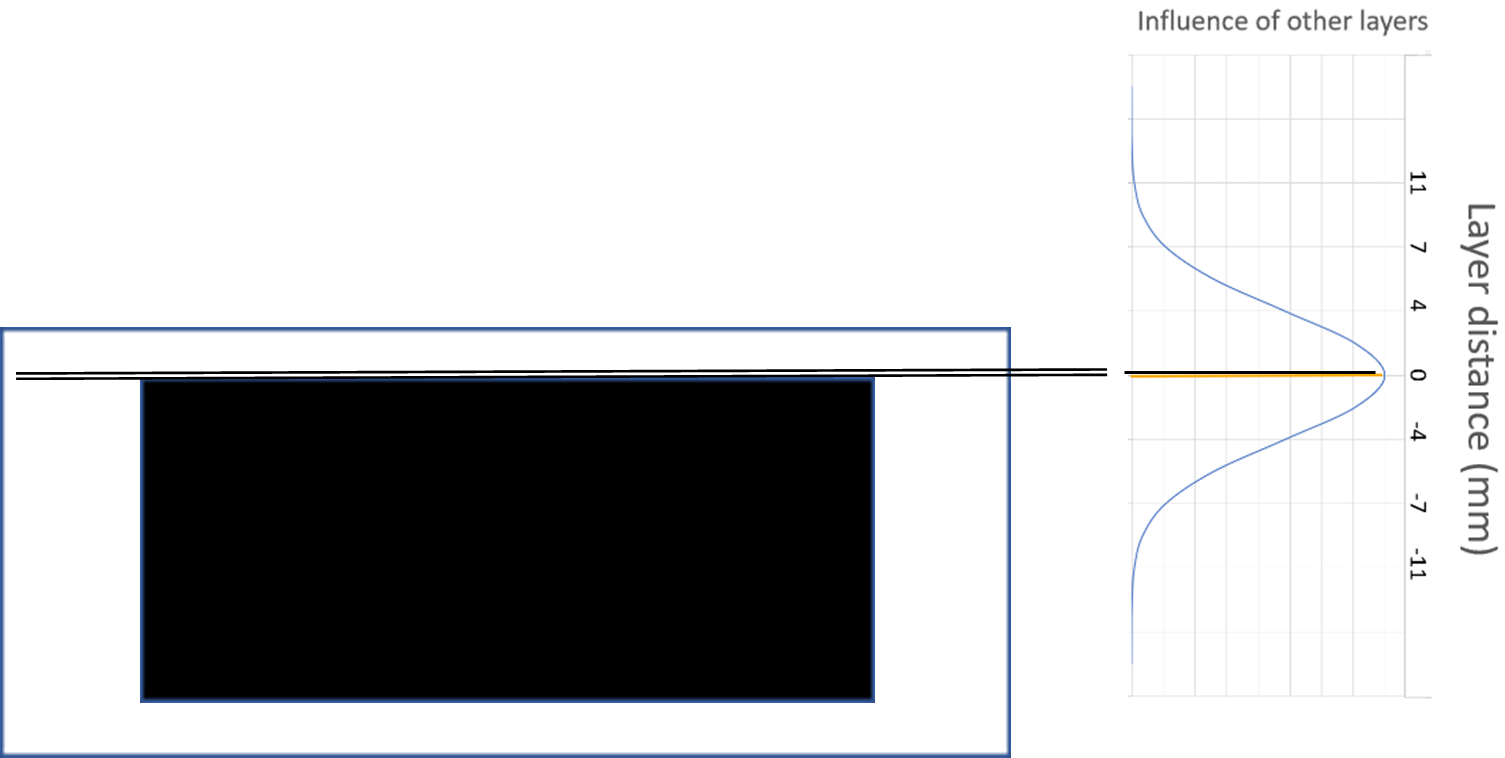
Depth resolution is determined by the operating bandwidth and is legally limited. The RadarImager has a depth resolution of 22 mm. This means that every selected layer in the image stack contains information from a surrounding depth range of approximately ±11 mm, with decreasing influence toward the edges.
As a result, if a target object and its packaging are closer together than 22 mm, their information overlaps in the displayed layer. This is an important limitation when interpreting structures that are close to each other in depth.
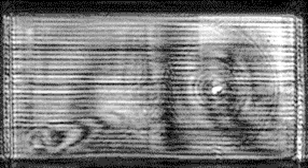
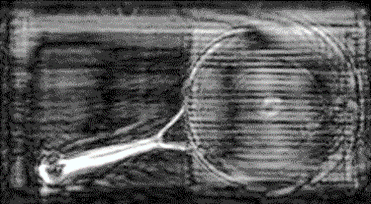
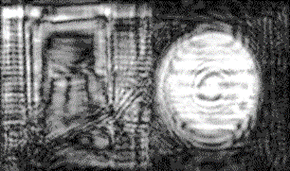
These three image cuts of a pan inside a package show that the layers are largely separated, but still contain some overlapping information.